
IT service and security operations
One admin for incidents, changes, configuration, knowledge, vulnerabilities, security incidents, and threat indicators. Fifteen Payload plugins. No public portal.
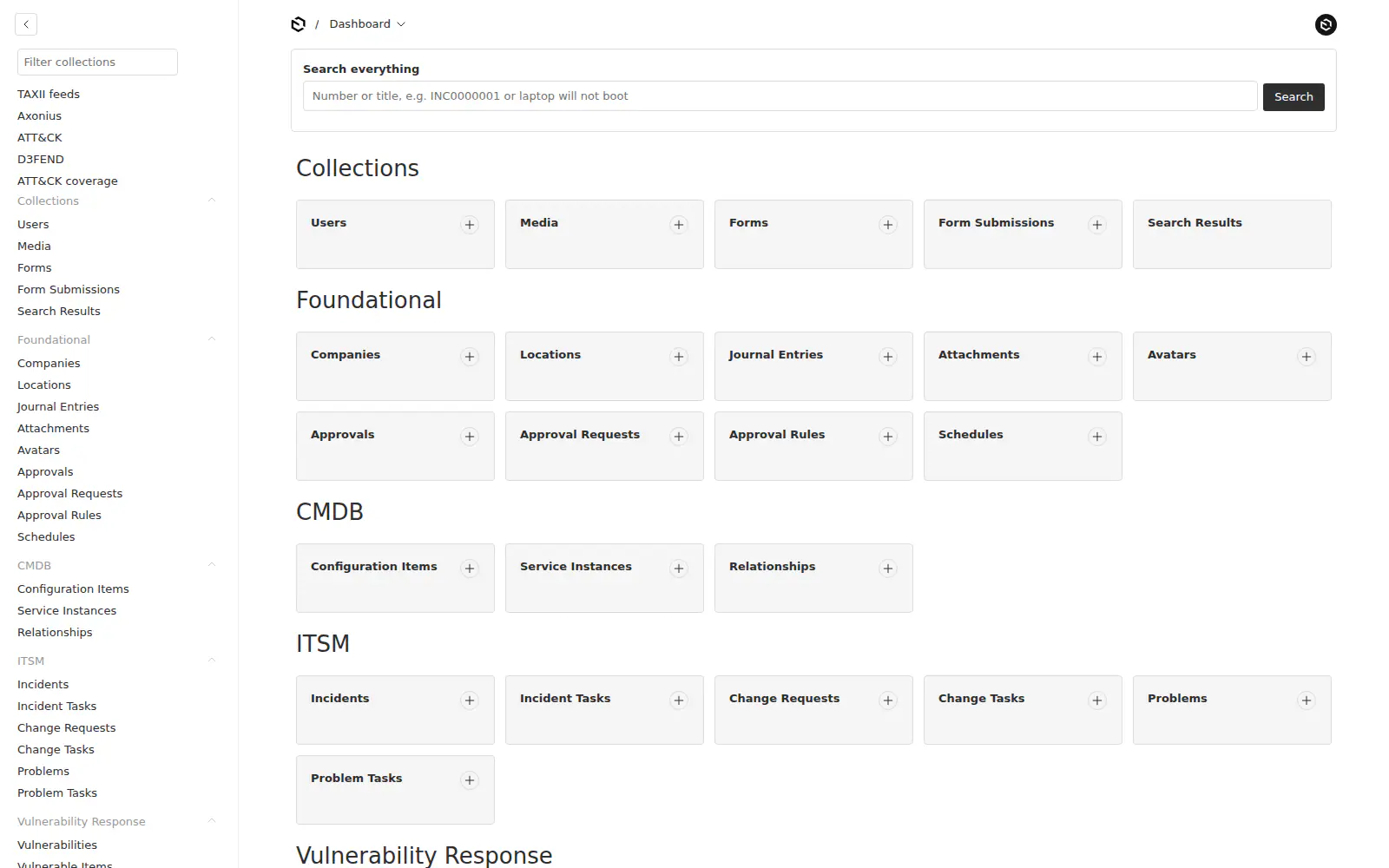
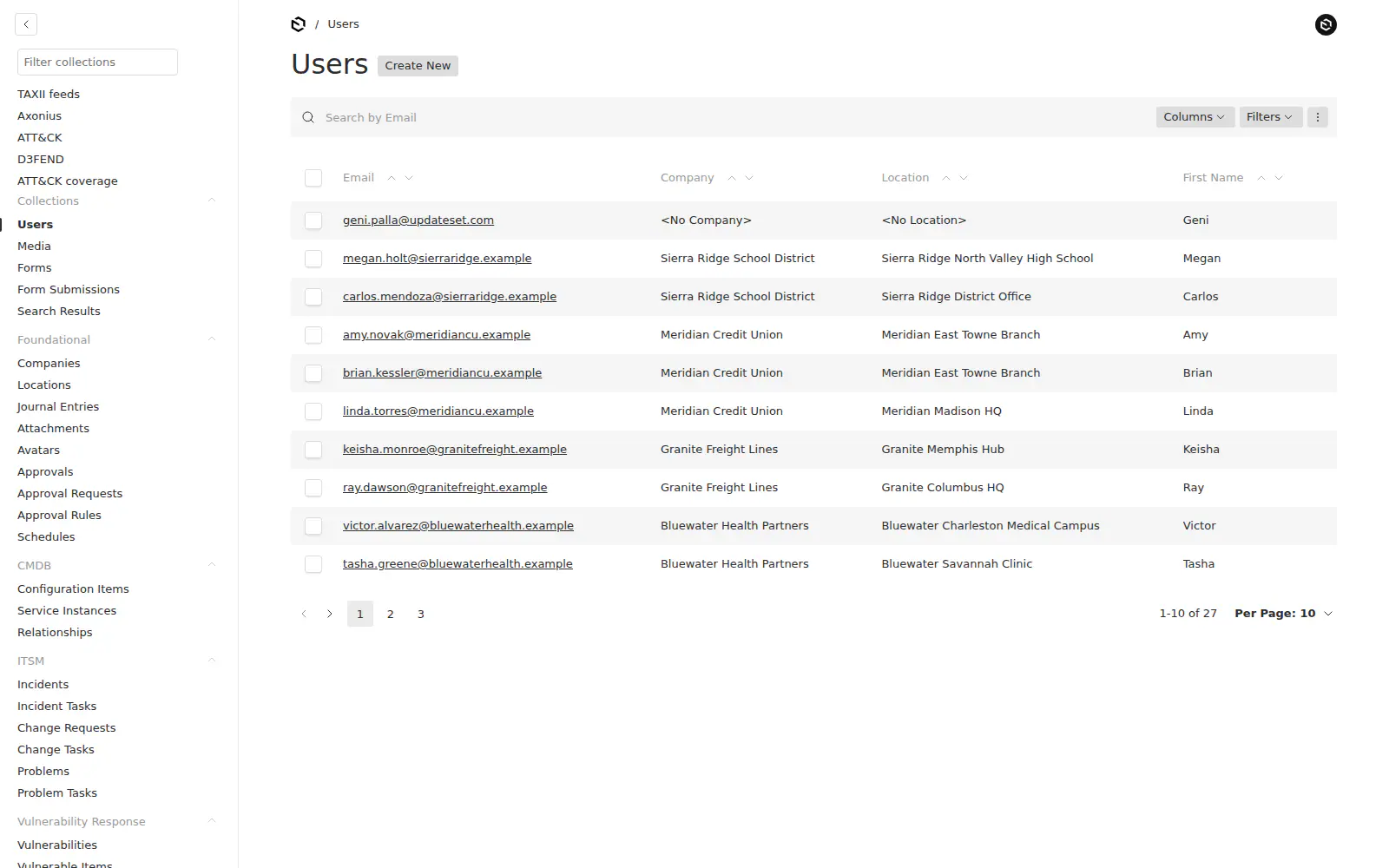
ITSM, security operations, MITRE, the configuration database, and knowledge share the same people, companies, and places.
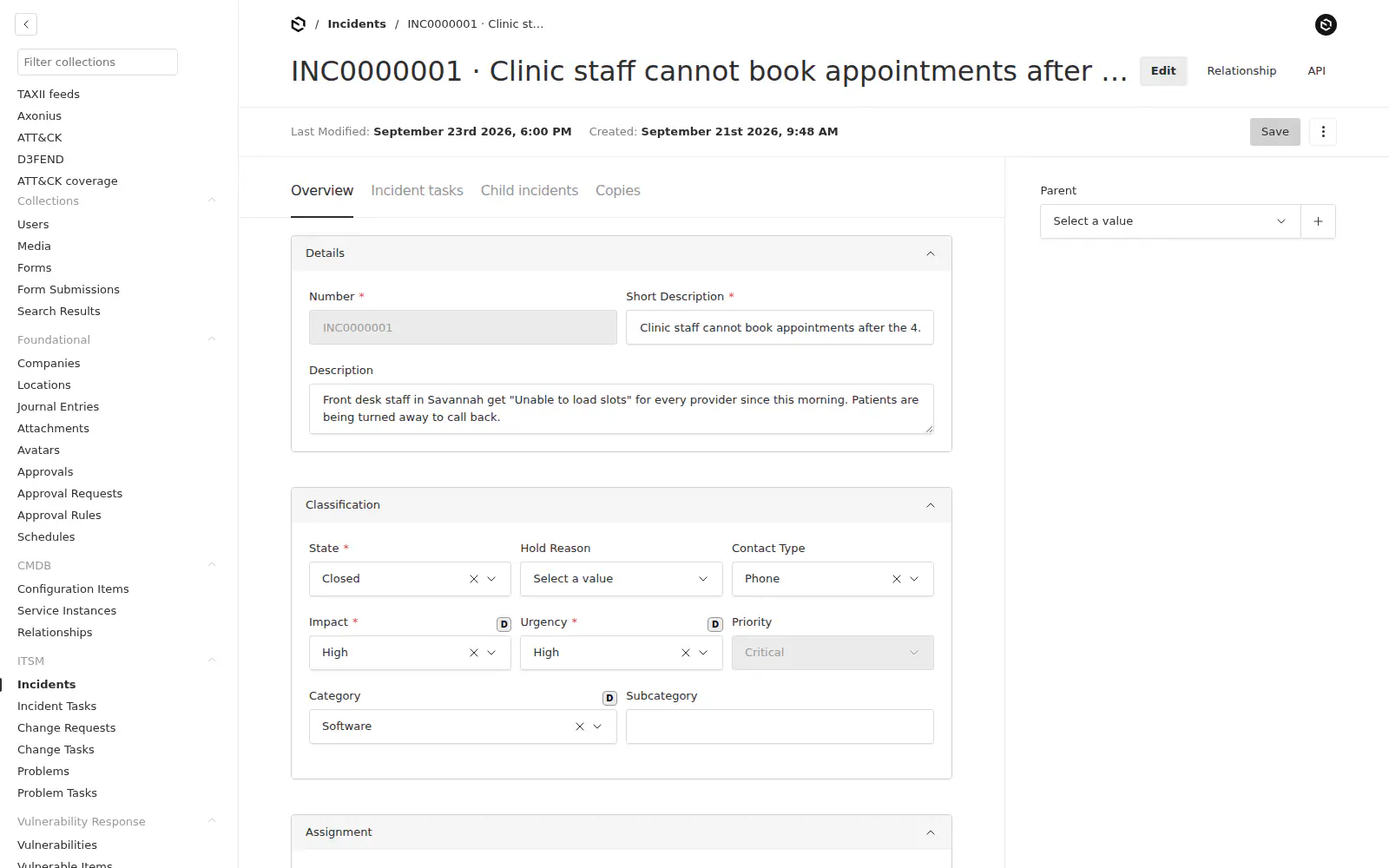
Incidents, problems, and changes, each with child tasks, in one admin.
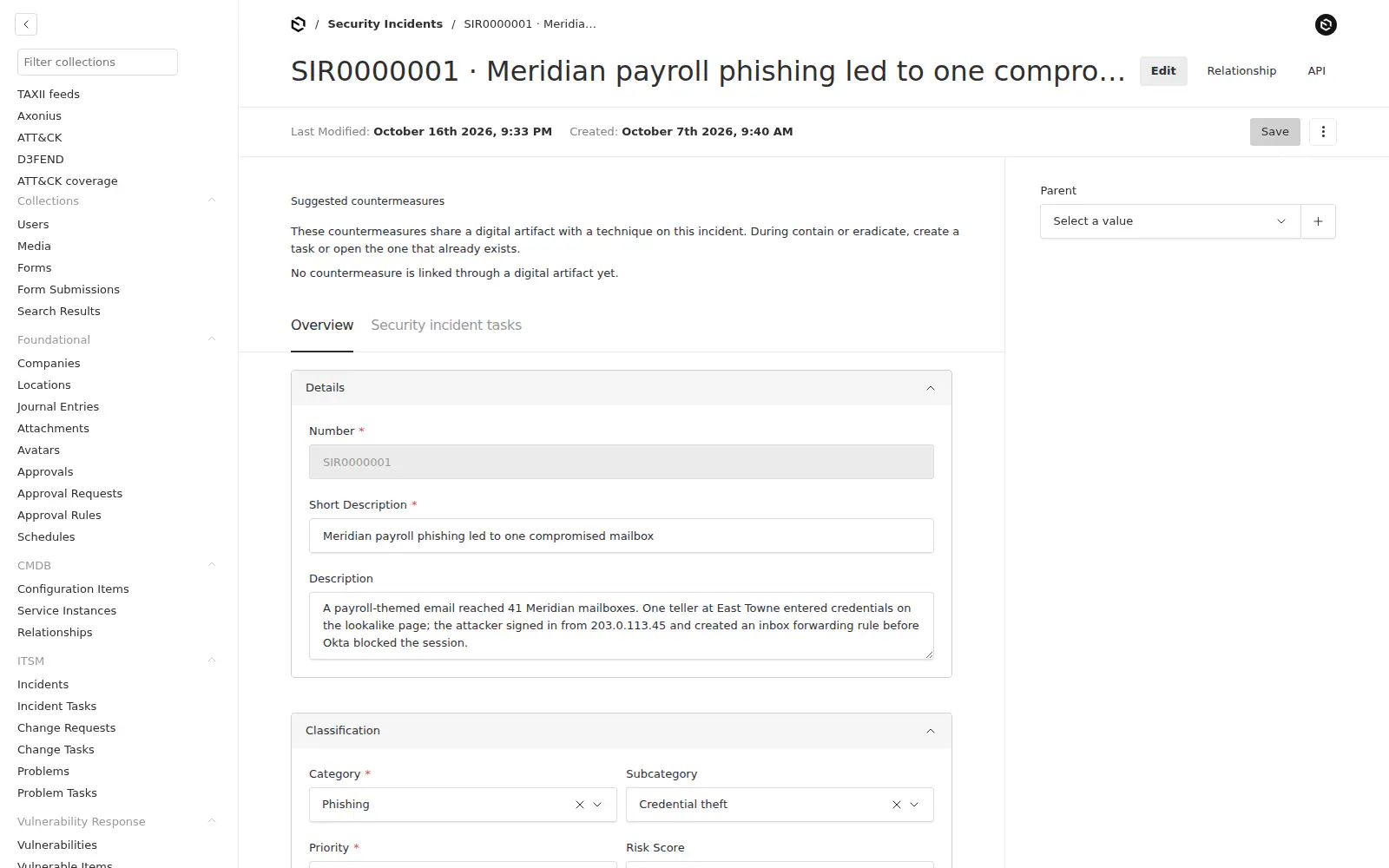
A security case, separate from an ITSM incident.
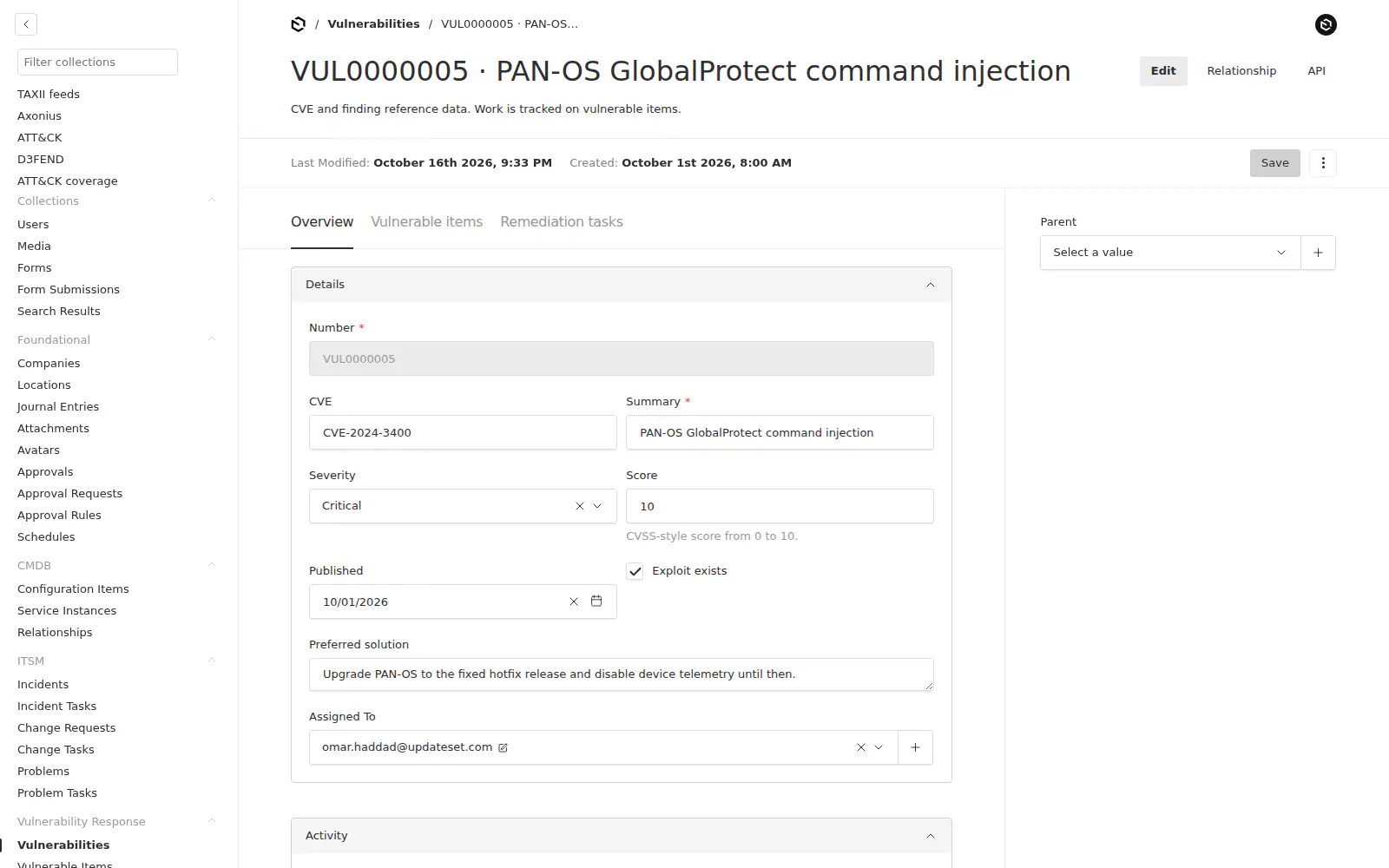
The finding, the configuration item it sits on, and the task that groups the work.
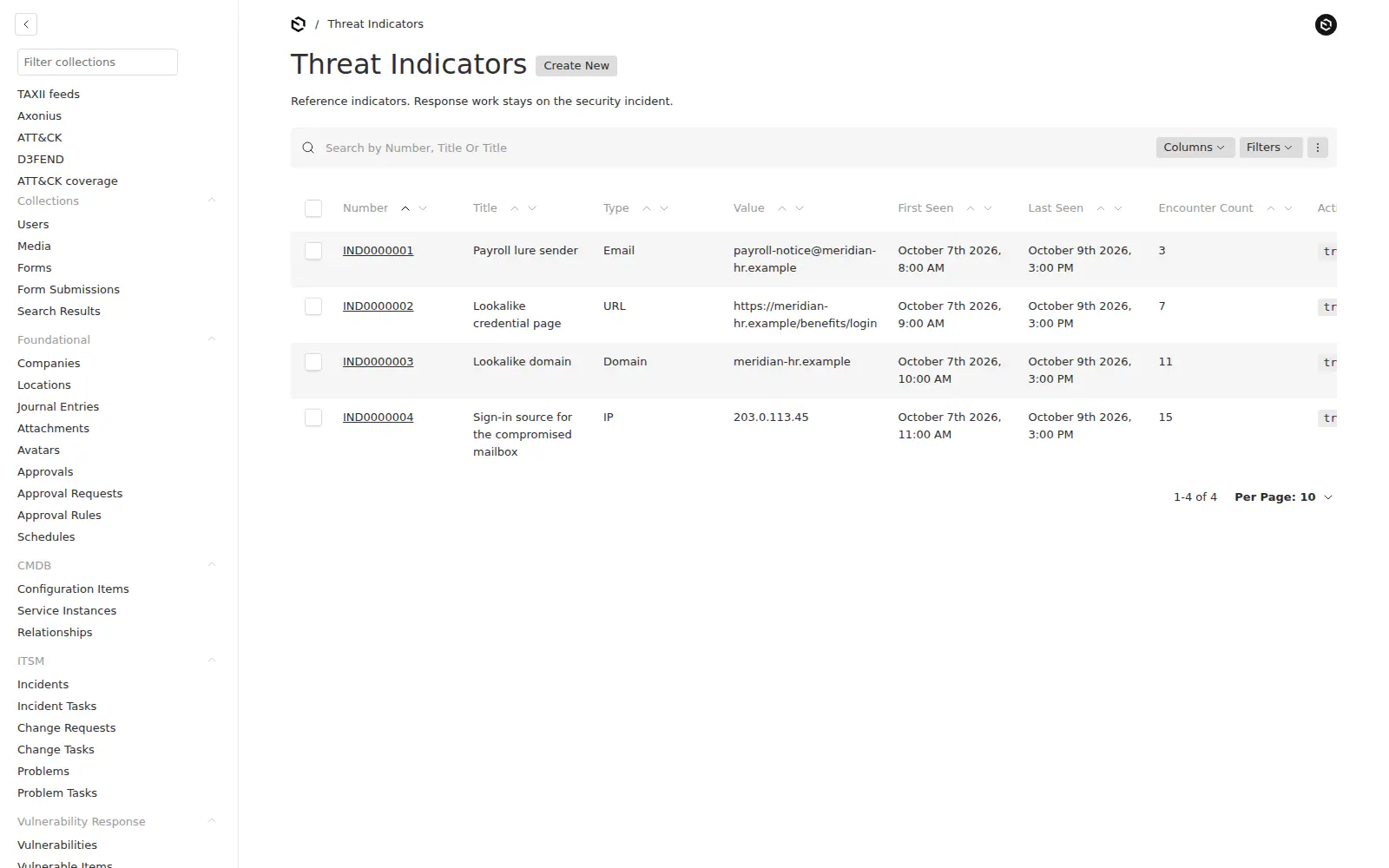
Indicators are reference data. The response stays on the security incident.
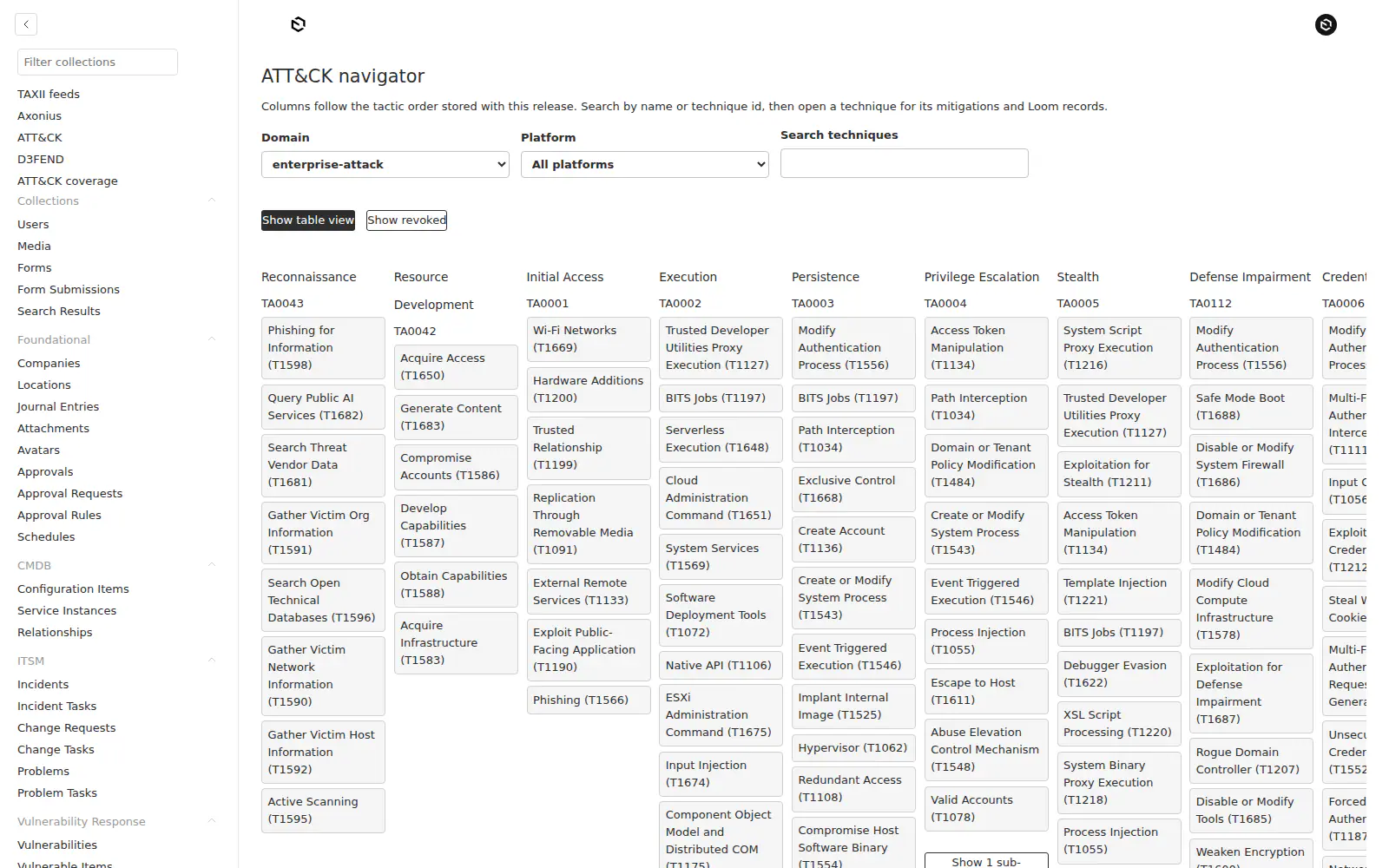
Reference catalogs and navigator pages. These are not tickets.
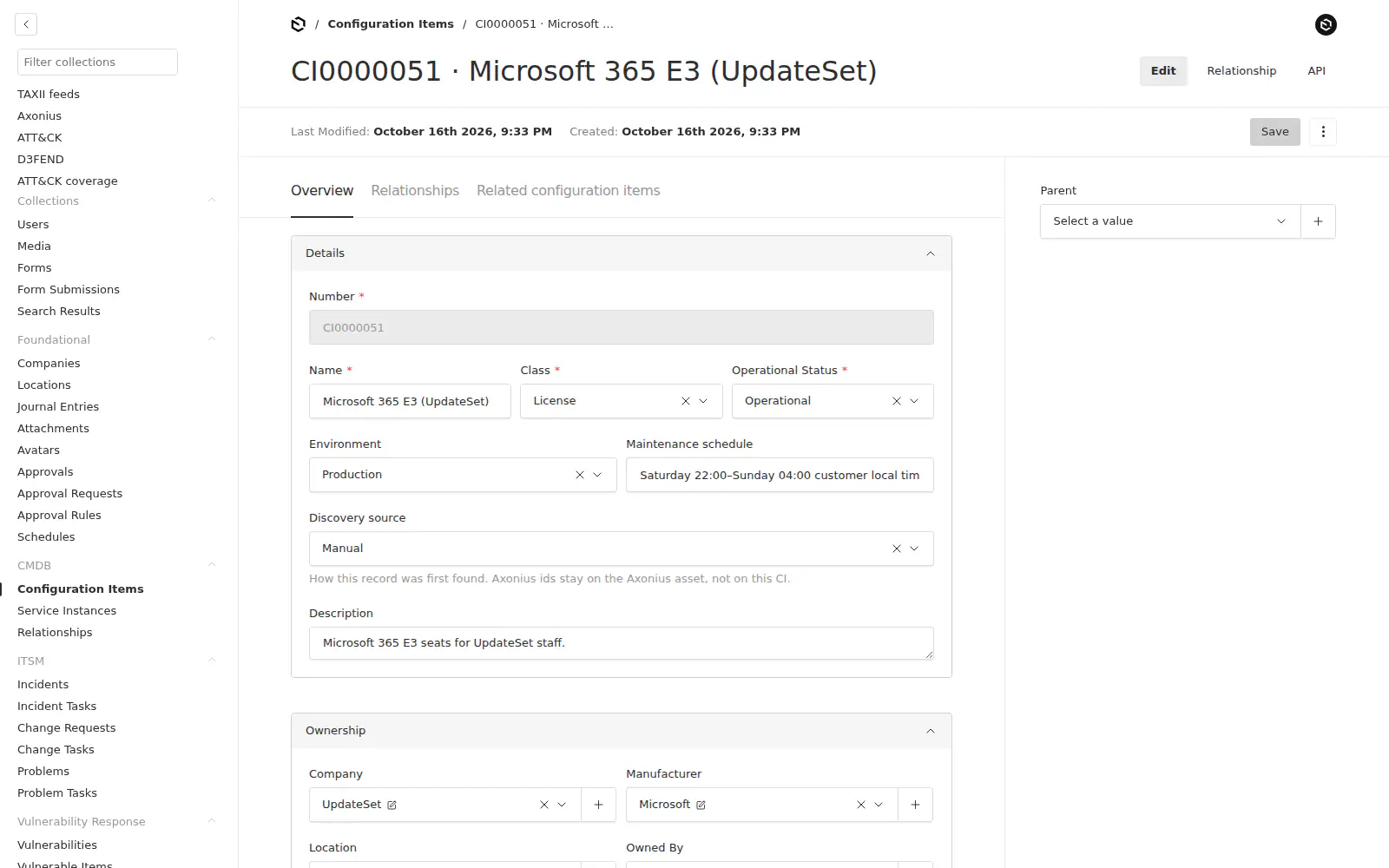
The systems and services the other modules name. One configuration item, many records pointing at it.
Libraries and articles that staff attach to the work.
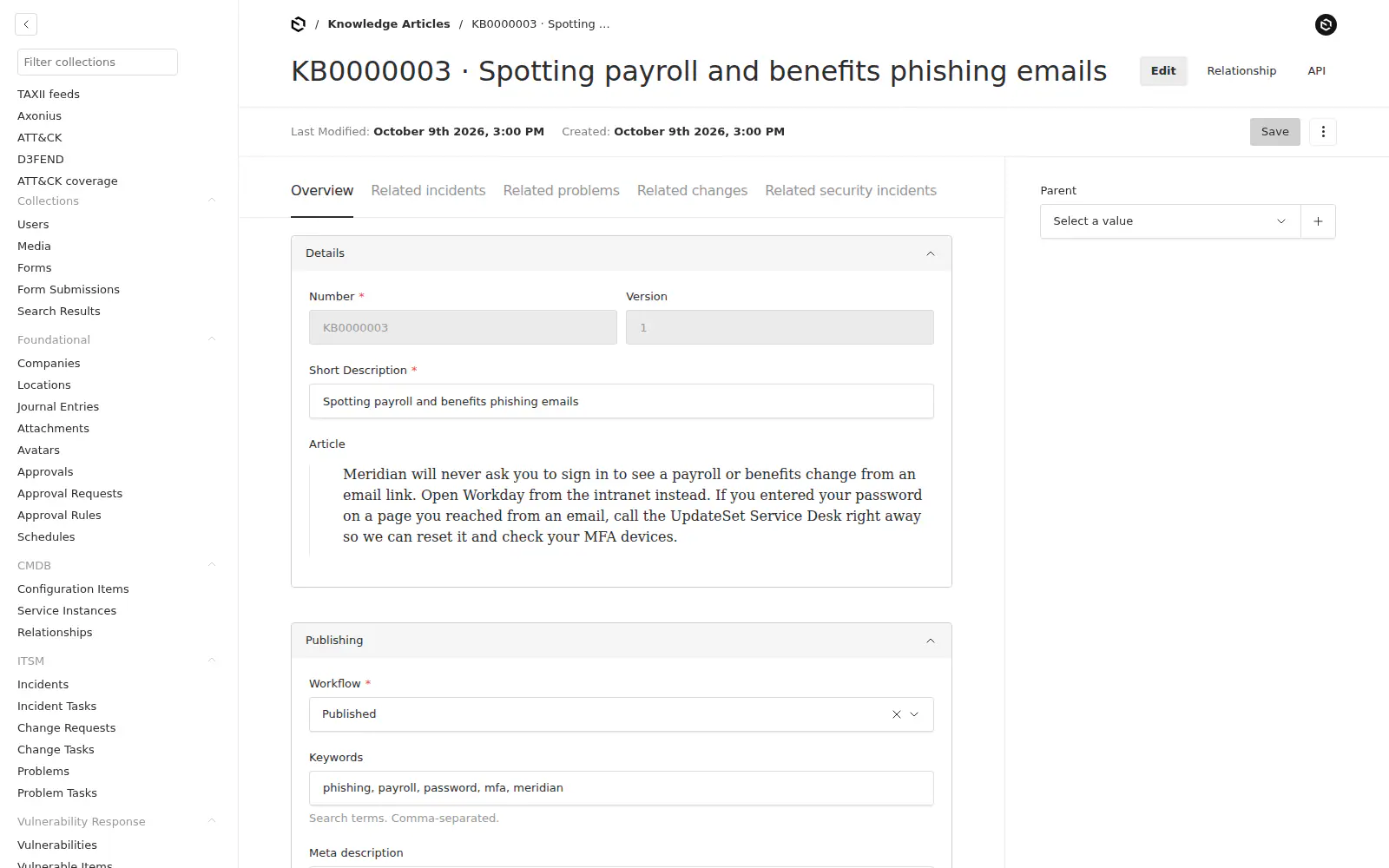
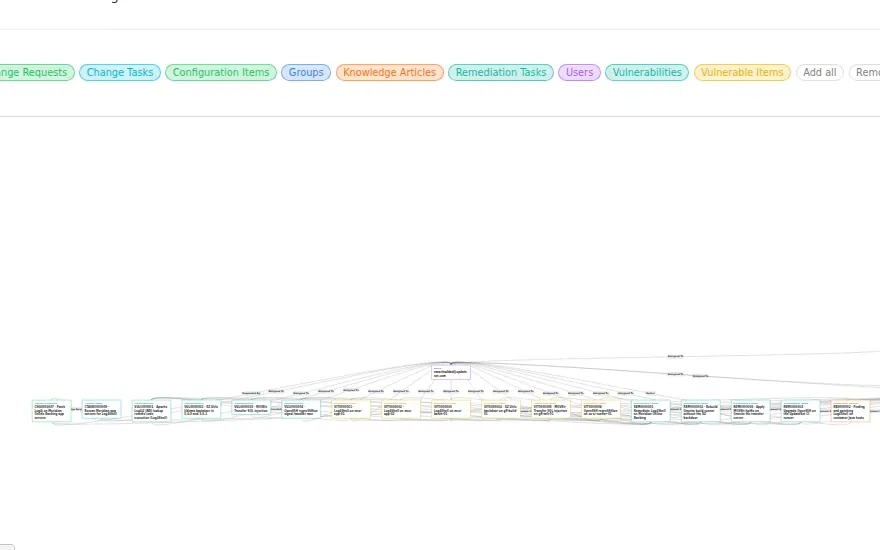
A Relationship tab shows how a saved record connects to the rest of the workspace.
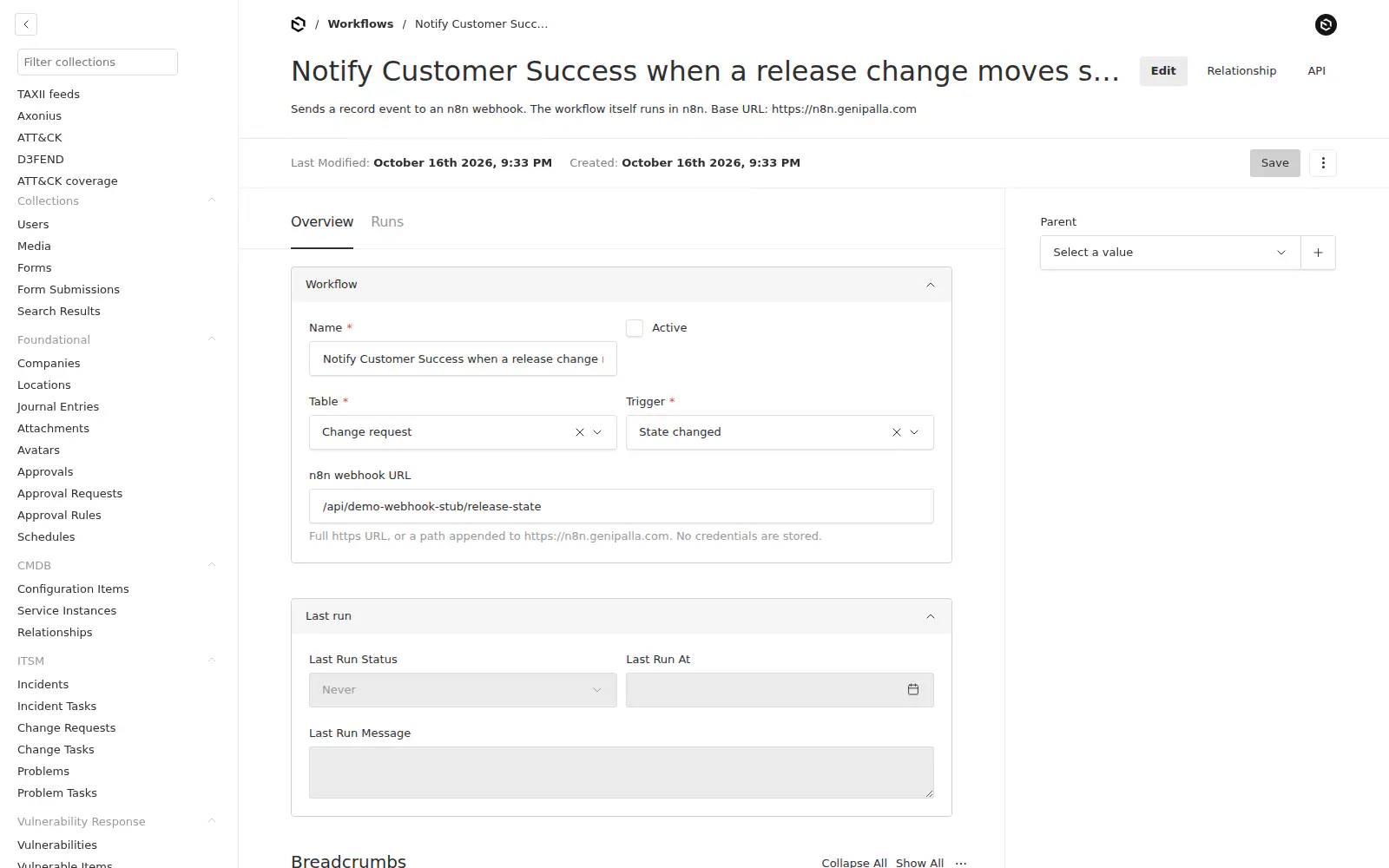
Record events can leave for n8n. Selected fields can suggest a value from the description.
Staff sign in to the admin. Password sign-in can be hidden. Microsoft and Keycloak appear only when that provider is configured, and Loom matches the account by issuer and subject, not by email. API keys for the MCP server named Loom are created in the admin. Callers do not get a submission page or a storefront.
Tell us how your service desk and security teams work today. We will map that work onto incidents, changes, the configuration database, and the security records Loom already keeps.
Argus, UpdateSet’s MCP gateway, is a separate product. Read about Argus.
